The Financial Domino Effect: How One Money Decision Can Change Everything Else
Money decisions rarely happen in isolation. You may think you are simply taking a new credit card, increasing your credit limit, moving to a more expensive apartment, taking a personal loan, or switching your bank. But each of these decisions can influence something else in your financial life.
That is what makes personal finance interesting and sometimes complicated.

Think of your finances like a row of dominoes. The first domino might be a salary increase. The next could be higher spending. Then perhaps a larger credit card balance, less money going into savings, and eventually less financial flexibility when an unexpected expense comes along. None of these decisions necessarily looked alarming on their own. It was the combination that created the problem.
The same effect can work in your favour, too. A salary increase could lead to higher savings, a stronger emergency fund, lower debt, and eventually greater financial freedom.
The important thing is to understand that one financial decision can create a chain reaction. Before making a money decision, it helps to look beyond the immediate benefit and consider what it could change elsewhere.
What Is the Financial Domino Effect?
The financial domino effect describes how one financial decision can trigger a series of related changes in your finances.
Consider something as simple as getting a raise. Your first thought might be that you now have more money to spend. You may decide to upgrade your home, buy a better car, travel more often, or start spending more on dining and entertainment.
There is nothing wrong with enjoying a higher income. The issue arises when your expenses increase at the same pace as your income.
For example, imagine your monthly salary increases by AED 3,000. If you put AED 1,000 towards savings, AED 1,000 towards a financial goal and use the remaining AED 1,000 for lifestyle improvements, your financial position has probably become stronger.
But if the entire AED 3,000 disappears into higher rent, subscriptions, dining, shopping and other recurring expenses, your income has increased without necessarily improving your financial resilience.
The first decision—how to use your salary increase has created very different outcomes.
That is the financial domino effect.
Your Salary Can Change More Than Your Lifestyle
Income is one of the biggest triggers for financial change. When people earn more, they naturally expect their lifestyle to improve. However, lifestyle inflation can quietly absorb much of the additional income.
A larger salary can mean a larger apartment, a newer car, more frequent holidays, more expensive restaurants and a growing number of subscriptions. Individually, these decisions may feel reasonable. The problem is that many of them create recurring expenses.
A one-time purchase is different from a commitment that follows you every month.
This is why a salary increase is a good opportunity to pause before increasing your lifestyle spending. Consider dividing the additional income between enjoying the present and strengthening your financial future.
You could use part of it to:
- Build or increase your emergency savings
- Pay down expensive debt
- Increase long-term investments
- Save towards a major financial goal
- Upgrade your lifestyle without increasing every recurring expense
The goal isn't to avoid spending more. It is to make sure that earning more actually leaves you financially better off.
A Credit Decision Can Create a Chain Reaction
Credit is another area where the domino effect is easy to overlook.
Suppose your salary increases and your bank offers you a higher credit card limit. A higher limit can provide greater flexibility, but it can also make it easier to spend more than you originally planned.
The important distinction is that a higher credit limit is not the same as higher disposable income.
If your spending increases simply because more credit is available, you could eventually have larger balances to repay. Those repayments then become another monthly commitment, potentially leaving less money for savings or other goals.
The same principle applies to personal loans. A loan may have a monthly payment that looks manageable when considered by itself. But your finances don't contain just one payment. You may also have rent, utilities, existing credit card balances, insurance, subscriptions, transport costs and other commitments.
This is why affordability should be looked at in context.
Instead of asking only, "Can I afford the monthly payment?", consider asking:
"How will this payment affect everything else I want or need to do with my money?"
Small Expenses Can Become Big Financial Commitments
Not every financial domino starts with a large purchase.
Sometimes it starts with a collection of small decisions that don't feel significant at the time.
You sign up for a streaming service. Then another. You add a food delivery membership, a fitness subscription, cloud storage, an app premium plan and a few monthly instalments. Each one may cost only AED 30, AED 50 or AED 100.
But recurring expenses have a way of becoming invisible because they happen automatically.
If you have five subscriptions costing AED 50 each, that is AED 250 every month or AED 3,000 a year. If you add other memberships and instalments, the number can become much larger.
This doesn't mean you should cancel every subscription. Instead, regularly ask whether each recurring expense is still providing enough value.
A useful financial review can include:
- Subscriptions you no longer use
- Bank and card fees
- Unused memberships
- Recurring instalments
- Insurance policies that may need reviewing
- Financial products whose benefits no longer match your needs
Sometimes improving your finances isn't about earning more. It is about stopping money from quietly leaking away.
Switching Banks Can Affect More Than Your Bank Account
Changing banks can be a smart financial decision. You might find better services, lower fees, improved digital banking, stronger savings options or financial products that suit your needs better.
But changing banks also means changing part of your financial infrastructure.
Your salary may be credited to your existing account. Your rent, utilities and other bills may be connected to it. Your credit card payments may be automatically deducted from the same account. You may also have standing instructions or subscriptions linked to it.
Before switching, it helps to look at the entire setup rather than focusing only on the new bank's headline benefit.
Ask yourself:
- Which payments are connected to my current account?
- Where is my salary credited?
- Which financial products are linked to the account?
- Are there outstanding balances or commitments?
- Are there fees or conditions attached to the new account?
- What needs to be transferred or updated?
A better product can be useful, but the decision should make sense within your overall financial system.
Financial Decisions Can Create Positive Domino Effects
The domino effect isn't necessarily something negative. In fact, some of the best financial habits work precisely because one good decision leads to another.
Imagine you receive a salary increase and decide to automatically put a portion of it into an emergency fund. Over time, you build enough savings to cover unexpected expenses.
Now, when your car needs an unexpected repair or you face an unplanned expense, you don't necessarily need to rely on a credit card or personal loan.
Because you had built a financial buffer, one good decision protected another part of your financial life.
The same principle can apply to paying down expensive debt. Reducing a monthly debt payment can free up cash flow. That additional cash can then go towards savings. Once your savings improve, you may have more flexibility to invest or work towards a major financial goal.
One decision can create a chain of positive outcomes.
Don't Look at Financial Products in Isolation
One of the biggest mistakes people make is evaluating financial products individually.
You might ask whether a particular credit card offers good rewards. You might compare two personal loans based on their interest rates. You might look for a savings account offering attractive returns.
Those comparisons are useful, but they don't tell you the whole story.
The better question is whether the product makes sense for your overall financial situation.
A credit card offering generous travel rewards may sound attractive, but if you rarely travel, those rewards may have little practical value. A card with a lower annual fee and benefits you regularly use could be more useful.
Similarly, a loan with a manageable monthly payment may still affect your ability to save for other goals.
Your financial products should work together rather than compete for the same portion of your monthly income.
Affordability Isn't the Same as Financial Comfort
This is one of the most important distinctions to make when evaluating a financial decision.
You might technically be able to afford something without being financially comfortable with it.
For example, perhaps your income allows you to take on an additional AED 2,000 monthly commitment. But after making that payment, you may have very little left for savings, unexpected expenses or other priorities.
There is a difference between:
"I can make this payment."
and
"I can make this payment while still maintaining a healthy financial cushion."
The second question is far more useful.
Financial flexibility matters because life rarely follows a perfect plan. Your income could change, an unexpected expense could appear, or your priorities could shift. The more of your income that is already committed, the less room you have to adapt.
Before Making a Money Decision, Look Three Steps Ahead
You don't need to predict every possible outcome before making a financial decision. A simple habit can help look three steps ahead.
First, look at the immediate impact. Will your monthly payment increase? Will your savings decrease? Will you need to move money between accounts?
Next, consider the secondary impact. Could the decision affect another financial goal? Could it change your ability to save, invest or manage existing debt?
Finally, consider what happens if circumstances change. Would you still be comfortable if an unexpected expense appeared? Would you still be able to meet your other commitments if your income were to change temporarily?
This doesn't mean avoiding every financial commitment. It simply means making decisions with the bigger picture in mind.
Your Financial Life Is a System
Personal finance is often taught as a collection of separate topics: budgeting, credit cards, loans, savings, investments and insurance.
These areas are connected.
Your income influences your spending. Your spending influences your savings. Your savings affect your financial resilience. Your borrowing affects your monthly cash flow. Your credit behaviour can influence future borrowing opportunities. Your financial products determine how efficiently you manage many of these decisions.
Change one part, and something else may move with it.
That is why financial health isn't simply about earning more or spending less. It is about how the different parts of your financial life work together.
The Bottom Line
The next time you're considering a financial decision, don't stop at the immediate question.
Don't just ask whether a new credit card has better rewards, whether you can afford a loan, whether you should increase your spending after a salary increase, or whether a new bank has a better offer.
Ask yourself:
"What happens next?"
That simple question can reveal the dominoes you might not have considered.
A good financial decision isn't necessarily the one that gives you the biggest immediate benefit. It is the one that fits comfortably into your wider financial life and helps move you towards your longer-term goals.
Make Your Next Financial Decision a Smarter One
Choosing a financial product is easier when you understand how it fits into your lifestyle and spending habits. Whether you're looking for a credit card that matches your everyday expenses, travel habits, rewards preferences or financial goals, TestMyCard can help you compare your options and find cards better suited to your needs.
Visit TestMyCard.ae to explore and compare credit cards based on what matters to you.
Latest Post

How to Build a Strong Credit History in the UAE Using Your Credit Card
Most people in the UAE get a credit card for the rewards. The cashback, the lounge access, and the dining discounts are the obvious reasons.

Why 2026 Is the Best Time to Be a Credit Card Holder in the UAE
Credit cards in the UAE have historically been approached with a degree of caution. While the rewards on offer were often appealing, eligibility requirements, complex fee structures

Choosing the Right Credit Card for Your Family in the UAE
Family life in the UAE comes with a unique spending pattern. Unlike single professionals who may concentrate their expenses on travel, dining, or lifestyle purchases,

How Much Credit Card Cashback Can You Realistically Earn in a Year
One of the most common questions credit card users in the UAE ask is simple, but important

The Smart Traveller's Guide to Using Credit Cards Abroad
For many UAE residents, international travel is no longer a once-a-year event. Whether it is a summer escape to Europe, a family holiday in Asia, or a quick city break over a long weekend, spending abroad has become a regular part of life.

Best Credit Cards for Booking Flights and Hotels This Summer in the UAE
Summer is one of the busiest travel seasons for UAE residents. Whether you're heading to London for cooler weather, Istanbul for a long weekend, the Maldives for a family holiday, or flying home to visit relatives, chances are your biggest expenses will be flights and accommodation.

How to Maximise Credit Card Rewards Without Overspending in the UAE
Most people in the UAE approach credit card rewards the wrong way. They assume more spending means more rewards

Premium vs. Entry-Level Credit Cards in the UAE- Is the Annual Fee Worth It?
You have seen them, the sleek metal cards, the platinum tiers, the promises of lounge access and complimentary chauffeur rides

How to Maximise Your Credit Card Rewards This Eid Al-Adha
Eid Al-Adha is almost here, falling on 26th May this year, and with it comes one of the biggest spending seasons on the UAE calendar

Should You Get Multiple Credit Cards? A UAE Guide
If you've ever wondered whether having more than one credit card is a smart move or a recipe for debt
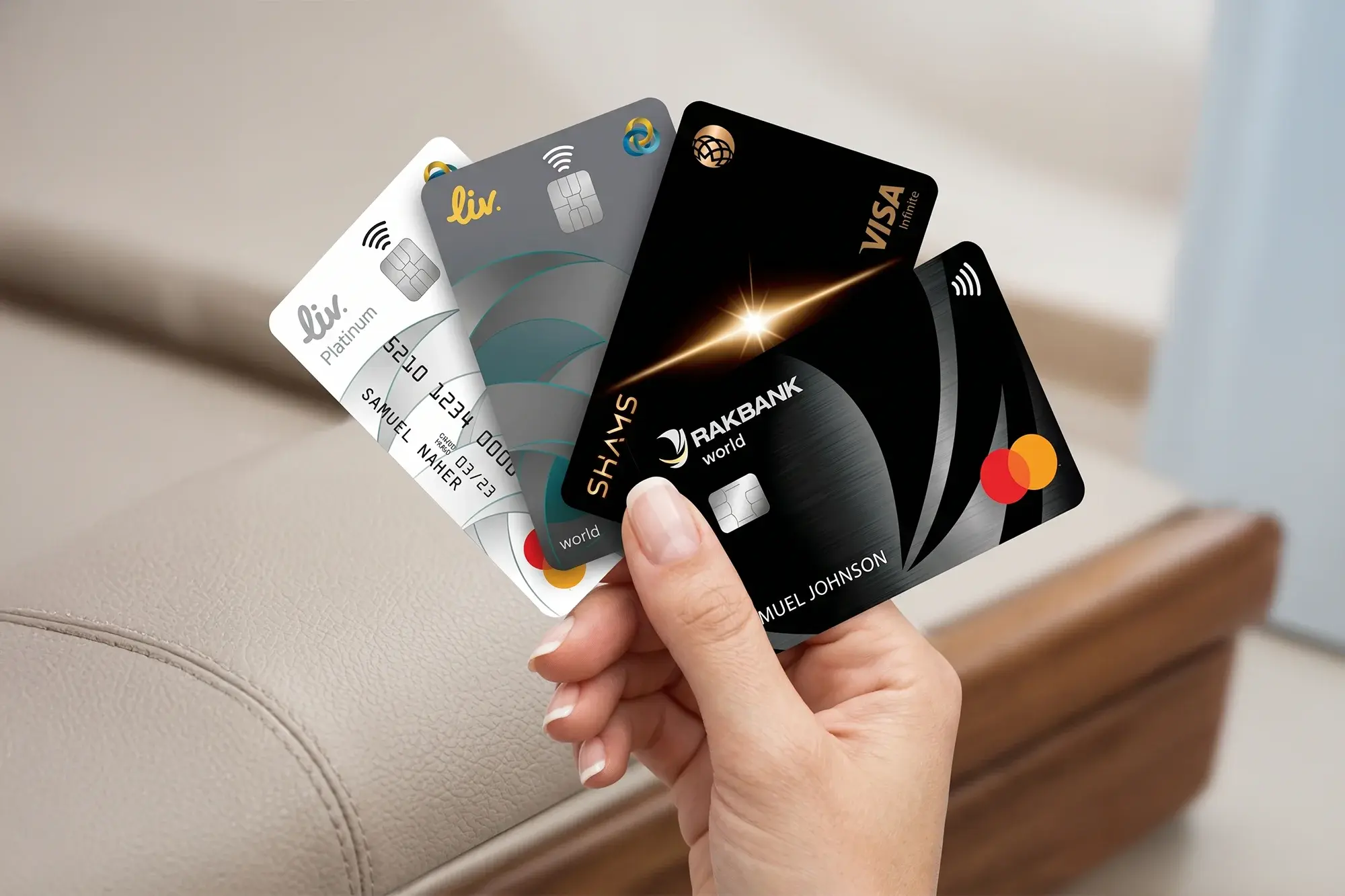
Best Credit Cards for Dining in the UAE : Earn While You Eat
Let's be honest — if your credit card isn't rewarding your Friday brunch, your weeknight takeaway, or your third coffee of the day, it's not working harder for you.

The Best Credit Cards for Grocery Shopping in the UAE
Groceries are non-negotiable. For a typical UAE household of four, monthly supermarket spending ranges from AED 2,500 to AED 4,000

How to Apply for Your First Credit Card in the UAE
Applying for a Credit Card in the UAE should be simple. Between salary thresholds, AECB score requirements, and a market that has genuinely changed in 2025,

Cashback vs. Air Miles: Which UAE Credit Card Is Right for You?
Credit cards in the UAE offer an impressive array of benefits. Two of the most popular features residents look for are cashback rewards and air miles. Each offers distinct advantages, but they work differently and suit different spending habits.

5 Common Mistakes to Avoid When Choosing a Credit Card in the UAE
Credit cards in the UAE offer a world of convenience and valuable benefits — from cashback and travel rewards to shopping discounts and exclusive services. Yet, despite countless offers and promotions, many residents end up choosing cards that don’t truly suit their needs.
How to Use Test My Card to Find the Best Credit Card for You in Minutes
The UAE has one of the most diverse credit card markets in the world. Cashback, air miles, shopping discounts, travel perks—every bank offers different deals to attract customers. While this competition benefits consumers, it also creates confusion.
Salary Below AED 5,000 in the UAE? What You Should Know About Credit Card Eligibility
In the UAE, many residents earning below AED 5,000 assume that credit cards are completely out of reach. While income requirements do play an important role, it is equally essential to understand how today’s lending rules

Top 5 Credit Cards in the UAE with No Annual Fees
For many residents in the UAE, credit cards are essential tools for everyday life — offering convenience, security, and valuable rewards. However, one feature that often frustrates users is the annual fee

How to Choose the Right Credit Card for Online Shopping in the UAE
Online shopping has become a regular part of life in the UAE. From ordering groceries and electronics to buying clothes, booking services and shopping during major sales, digital payments make everyday purchases easier.

How to Read Your Credit Card Statement in the UAE: A Simple Guide
Using a credit card is convenient, whether you are shopping online, paying for groceries, booking flights, or managing everyday expenses.

Money Lessons Should Start Before the First Paycheque
Most children encounter money long before they understand what it means. They watch their parents pay for groceries, order food, use a card at a restaurant, shop online or make payments through their phones.

The UAE Financial Vocabulary: Making Sense of the Terms You See Every Day
Walk into any UAE bank, browse a credit-card comparison page or scroll through an offer online, and you are likely to come across a familiar pattern.

The Convenience of “Buy Now”: How Delayed Payments Change the Way We Spend
You see a phone priced at AED 3,000. Then, right next to it, you see: AED 250 per month.

The Financial Domino Effect: How One Money Decision Can Change Everything Else
Money decisions rarely happen in isolation. You may think you are simply taking a new credit card, increasing your credit limit, moving to a more expensive apartment, taking a personal loan, or switching your bank.

The Spending Paradox: Why a High Salary Can Still Feel Like It's Not Enough
A higher salary should make you feel financially better off. You earn more, so naturally, you expect to have more money available for savings, investments, travel and the things you enjoy

Financial FOMO: Are You Choosing Products Because Everyone Else Is?
Your colleague just got a new credit card because the cashback is insane. Your cousin switched banks because their favourite influencer swears by it.

The Data Behind Your Wallet: How Banks Understand Your Financial Behaviour
Every time you tap your card at a coffee shop, pay a utility bill, or transfer money to a friend, you're leaving behind a small piece of information.

Your Money Personality: Are You a Saver, Spender, Optimiser, or Maximiser?
Ask two people with the same salary how they handle money, and you'll often get two completely different answers. One keeps a strict budget and rarely touches their savings.
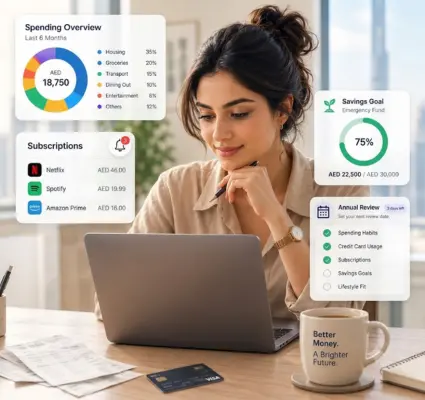
The Personal Finance Reset: 5 Things Everyone Should Review Every Year
Most of us wouldn't drive a car for a full year without a service check. Yet many people go twelve months or more without giving their finances the same basic maintenance

How AI Is Changing the Way UAE Residents Choose Credit Cards
Until recently, choosing a credit card in the UAE meant scrolling through bank websites, opening a handful of tabs

Big-Ticket Purchases Made Easy: How 0% Instalment Plans Work on UAE Credit Cards
Buying a new laptop, upgrading your home appliances, or booking a family trip often means spending a large amount of money in one go. For many UAE residents

How Minimum Salary Thresholds Are Set and Why They Vary by Card Tier
Every UAE bank checks one thing first when reviewing a credit card application: your monthly salary. Before anything else is considered

The Rise of Super App Co-Branded Cards (noon, Talabat, Careem) and What They Mean for Your Rewards
UAE banks are increasingly building credit cards around the apps people already use every day, rather than offering generic cashback on broad spending categories

Understanding Interest-Free Periods : How to Enjoy Your Credit Card Without Paying a Dirham in Interest
Picture this: your salary gets credited on the 1st, and by the 25th, you've swiped your card for everything from groceries to a weekend trip.

The Psychology of Swiping: Why Credit Cards Feel Different from Cash
Picture two Fridays. On the first, you withdraw AED 500 in cash for brunch at a restaurant in Dubai Marina, and you feel every dirham leave your wallet as the bill adds up.
How to Build a Strong Credit History in the UAE Using Your Credit Card
Most people in the UAE get a credit card for the rewards. The cashback, the lounge access, and the dining discounts are the obvious reasons.
Why 2026 Is the Best Time to Be a Credit Card Holder in the UAE
Credit cards in the UAE have historically been approached with a degree of caution. While the rewards on offer were often appealing, eligibility requirements, complex fee structures
Choosing the Right Credit Card for Your Family in the UAE
Family life in the UAE comes with a unique spending pattern. Unlike single professionals who may concentrate their expenses on travel, dining, or lifestyle purchases,
How Much Credit Card Cashback Can You Realistically Earn in a Year
One of the most common questions credit card users in the UAE ask is simple, but important
The Smart Traveller's Guide to Using Credit Cards Abroad
For many UAE residents, international travel is no longer a once-a-year event. Whether it is a summer escape to Europe, a family holiday in Asia, or a quick city break over a long weekend, spending abroad has become a regular part of life.
Best Credit Cards for Booking Flights and Hotels This Summer in the UAE
Summer is one of the busiest travel seasons for UAE residents. Whether you're heading to London for cooler weather, Istanbul for a long weekend, the Maldives for a family holiday, or flying home to visit relatives, chances are your biggest expenses will be flights and accommodation.
How to Maximise Credit Card Rewards Without Overspending in the UAE
Most people in the UAE approach credit card rewards the wrong way. They assume more spending means more rewards
Premium vs. Entry-Level Credit Cards in the UAE- Is the Annual Fee Worth It?
You have seen them, the sleek metal cards, the platinum tiers, the promises of lounge access and complimentary chauffeur rides
How to Maximise Your Credit Card Rewards This Eid Al-Adha
Eid Al-Adha is almost here, falling on 26th May this year, and with it comes one of the biggest spending seasons on the UAE calendar
Should You Get Multiple Credit Cards? A UAE Guide
If you've ever wondered whether having more than one credit card is a smart move or a recipe for debt
Best Credit Cards for Dining in the UAE : Earn While You Eat
Let's be honest — if your credit card isn't rewarding your Friday brunch, your weeknight takeaway, or your third coffee of the day, it's not working harder for you.
The Best Credit Cards for Grocery Shopping in the UAE
Groceries are non-negotiable. For a typical UAE household of four, monthly supermarket spending ranges from AED 2,500 to AED 4,000
How to Apply for Your First Credit Card in the UAE
Applying for a Credit Card in the UAE should be simple. Between salary thresholds, AECB score requirements, and a market that has genuinely changed in 2025,
Cashback vs. Air Miles: Which UAE Credit Card Is Right for You?
Credit cards in the UAE offer an impressive array of benefits. Two of the most popular features residents look for are cashback rewards and air miles. Each offers distinct advantages, but they work differently and suit different spending habits.
5 Common Mistakes to Avoid When Choosing a Credit Card in the UAE
Credit cards in the UAE offer a world of convenience and valuable benefits — from cashback and travel rewards to shopping discounts and exclusive services. Yet, despite countless offers and promotions, many residents end up choosing cards that don’t truly suit their needs.
How to Use Test My Card to Find the Best Credit Card for You in Minutes
The UAE has one of the most diverse credit card markets in the world. Cashback, air miles, shopping discounts, travel perks—every bank offers different deals to attract customers. While this competition benefits consumers, it also creates confusion.
Salary Below AED 5,000 in the UAE? What You Should Know About Credit Card Eligibility
In the UAE, many residents earning below AED 5,000 assume that credit cards are completely out of reach. While income requirements do play an important role, it is equally essential to understand how today’s lending rules
Top 5 Credit Cards in the UAE with No Annual Fees
For many residents in the UAE, credit cards are essential tools for everyday life — offering convenience, security, and valuable rewards. However, one feature that often frustrates users is the annual fee
How to Choose the Right Credit Card for Online Shopping in the UAE
Online shopping has become a regular part of life in the UAE. From ordering groceries and electronics to buying clothes, booking services and shopping during major sales, digital payments make everyday purchases easier.
How to Read Your Credit Card Statement in the UAE: A Simple Guide
Using a credit card is convenient, whether you are shopping online, paying for groceries, booking flights, or managing everyday expenses.
Money Lessons Should Start Before the First Paycheque
Most children encounter money long before they understand what it means. They watch their parents pay for groceries, order food, use a card at a restaurant, shop online or make payments through their phones.
The UAE Financial Vocabulary: Making Sense of the Terms You See Every Day
Walk into any UAE bank, browse a credit-card comparison page or scroll through an offer online, and you are likely to come across a familiar pattern.
The Convenience of “Buy Now”: How Delayed Payments Change the Way We Spend
You see a phone priced at AED 3,000. Then, right next to it, you see: AED 250 per month.
The Financial Domino Effect: How One Money Decision Can Change Everything Else
Money decisions rarely happen in isolation. You may think you are simply taking a new credit card, increasing your credit limit, moving to a more expensive apartment, taking a personal loan, or switching your bank.
The Spending Paradox: Why a High Salary Can Still Feel Like It's Not Enough
A higher salary should make you feel financially better off. You earn more, so naturally, you expect to have more money available for savings, investments, travel and the things you enjoy
Financial FOMO: Are You Choosing Products Because Everyone Else Is?
Your colleague just got a new credit card because the cashback is insane. Your cousin switched banks because their favourite influencer swears by it.
The Data Behind Your Wallet: How Banks Understand Your Financial Behaviour
Every time you tap your card at a coffee shop, pay a utility bill, or transfer money to a friend, you're leaving behind a small piece of information.
Your Money Personality: Are You a Saver, Spender, Optimiser, or Maximiser?
Ask two people with the same salary how they handle money, and you'll often get two completely different answers. One keeps a strict budget and rarely touches their savings.
The Personal Finance Reset: 5 Things Everyone Should Review Every Year
Most of us wouldn't drive a car for a full year without a service check. Yet many people go twelve months or more without giving their finances the same basic maintenance
How AI Is Changing the Way UAE Residents Choose Credit Cards
Until recently, choosing a credit card in the UAE meant scrolling through bank websites, opening a handful of tabs
Big-Ticket Purchases Made Easy: How 0% Instalment Plans Work on UAE Credit Cards
Buying a new laptop, upgrading your home appliances, or booking a family trip often means spending a large amount of money in one go. For many UAE residents
How Minimum Salary Thresholds Are Set and Why They Vary by Card Tier
Every UAE bank checks one thing first when reviewing a credit card application: your monthly salary. Before anything else is considered
The Rise of Super App Co-Branded Cards (noon, Talabat, Careem) and What They Mean for Your Rewards
UAE banks are increasingly building credit cards around the apps people already use every day, rather than offering generic cashback on broad spending categories
Understanding Interest-Free Periods : How to Enjoy Your Credit Card Without Paying a Dirham in Interest
Picture this: your salary gets credited on the 1st, and by the 25th, you've swiped your card for everything from groceries to a weekend trip.
The Psychology of Swiping: Why Credit Cards Feel Different from Cash
Picture two Fridays. On the first, you withdraw AED 500 in cash for brunch at a restaurant in Dubai Marina, and you feel every dirham leave your wallet as the bill adds up.
How to Build a Strong Credit History in the UAE Using Your Credit Card
Most people in the UAE get a credit card for the rewards. The cashback, the lounge access, and the dining discounts are the obvious reasons.

